Web development15 Sept 2026· 7 min read
Building one website in Arabic, French and English
Right-to-left layouts, Arabic typography, translated addresses and search: what it takes to do three languages properly.
By Craftigital
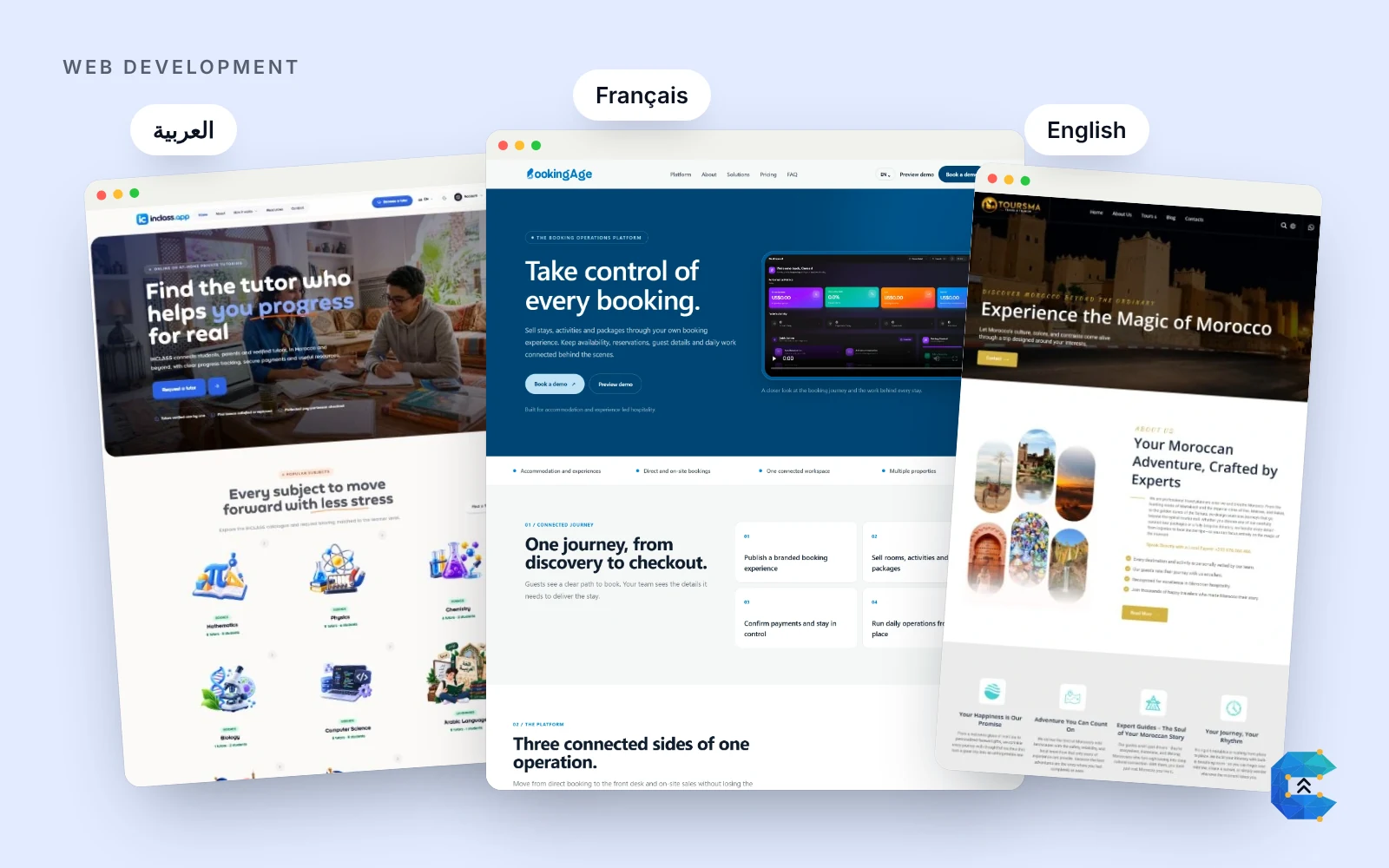
In Morocco, many customers switch between Arabic, French and English in the same day. A website that treats two of those languages as an afterthought loses trust quickly. Here is how we build sites that feel native in all three.
1. Plan right-to-left from the first wireframe
Arabic is not a mirrored copy of the French layout. Navigation, icons with direction, progress bars, carousels and forms all need to flip correctly. We use logical spacing (start and end instead of left and right) so the layout adapts by itself.
2. Choose type that works in both scripts
Latin and Arabic letters have different heights and rhythms. Pair a Latin family with an Arabic family designed to sit beside it, and adjust line height and letter spacing for Arabic instead of reusing the Latin settings.
3. Translate, don't just convert
Machine translation is a starting point, not a result. Headlines, calls to action and legal text deserve a human writer in each language — with the same tone, not the same words.
4. Give each language its own addresses
- One URL per language (/ar, /fr, /en)
- Translated page slugs where it helps
- hreflang tags linking the versions
- A language switch that keeps you on the same page
5. Let the team manage content in all three
An admin where each page, offer or article has its three versions side by side makes it obvious when one is missing — and keeps the site consistent without a developer.
Conclusion
Three languages done well is a real competitive edge: more people understand you, search engines index more pages, and the brand feels local wherever the visitor comes from.
Up next
Agritech: designing tools that work in the field
View